Habit Cue or Calendar Slot? Two Ways to Make a Routine Stick
Habit cue or calendar slot? Learn which routine anchor suits your schedule, how to choose one, and what to adjust when a habit keeps slipping.
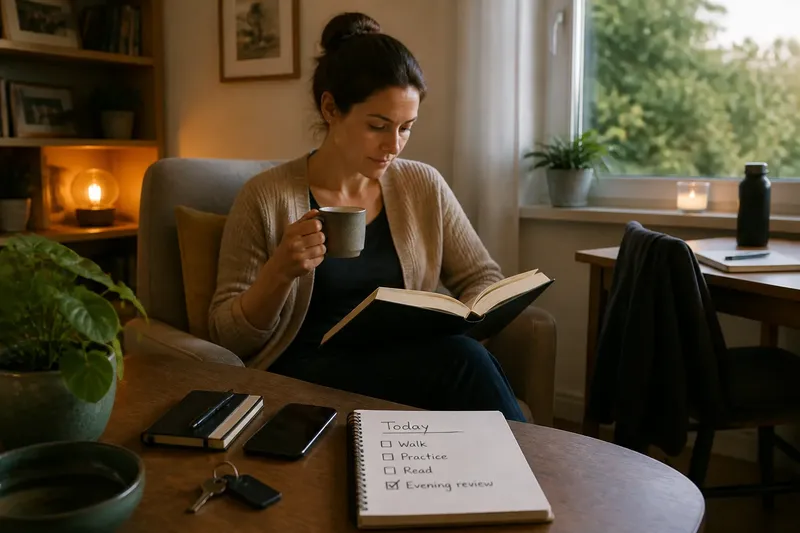
A habit cue or calendar slot can each give a routine a reliable place in your day, but they solve different problems. A cue attaches the action to something that already happens; a calendar slot reserves a particular time for it. The better choice depends less on willpower than on whether your day is predictable in sequence or in hours.
A cue depends on what happens before the habit
A cue is an event or circumstance that reminds you to begin. It might be putting the kettle on, closing your laptop after work, or arriving home and placing your keys in a bowl. The cue does not need to be a clock time. Its usefulness comes from being recognisable and likely to occur.
To use one, choose a routine that can follow the cue without an awkward gap. For instance, you might stretch briefly after brushing your teeth in the morning. The established action supplies the prompt, while the new action follows it. That pairing is easier to recall than a vague intention such as “stretch more”.
Think of a cue as a hook beside a door: it gives one particular thing a place to hang. It does not decide how long the thing stays there or whether the rest of the day is free. A cue can make starting feel natural, but it cannot create time when the next commitment immediately takes over.
A calendar slot protects a particular time
A calendar slot is a deliberate appointment with yourself. You choose a time and reserve room for the habit, using a paper diary, a phone calendar or another reminder you already consult. It is especially helpful when the habit needs a longer stretch of attention or when its purpose depends on being done at a particular point in the day.
For example, setting aside time after lunch to practise an instrument gives the session a boundary. You can decide in advance what counts as the planned activity and avoid leaving it to the uncertain end of the evening. A slot also makes competing demands visible: if a meeting occupies the same time, you can move one commitment rather than hoping both will fit.
Time-based plans are less dependable when the day shifts often. A reminder may sound while you are travelling, caring for someone, or dealing with an unexpected task. If the habit cannot be moved, a missed slot can become a missed routine. It helps to decide in advance whether the appointment can shift, and what will happen when it does.
Choose according to how your day behaves
Notice what stays steady in your schedule. Some people have a changing timetable but a familiar sequence of events: breakfast, school drop-off, the first pause at work, or locking the front door. A cue can fit that pattern because it travels with the event rather than depending on the same hour.
Other people have a dependable daily timetable but few stable transitions. A calendar slot can suit them better, particularly for a habit that needs quiet, equipment or a clear block of focus. The routine may be writing, a walk, language practice or preparing for a recurring responsibility. In each case, the question is whether the action needs a dependable trigger or protected time.
Some routines need both. A regular evening review, for instance, may need a time when the household is settled and a cue such as putting away the dinner dishes. The time protects space; the cue helps you remember what to begin. Use both only when each does a separate job. Adding reminders without a clear purpose can turn a simple habit into another system to maintain.
Start with a small, observable version
Before choosing an anchor, define the action plainly. “Be more organised” is hard to start because it could mean many things. “Put tomorrow’s appointment card beside my bag” is visible and finite. A clear action lets you judge whether the cue or slot actually helped, rather than leaving you to assess a broad intention.
Say you want to read more, but your workday ends at a different time each evening. You choose the cue of placing your phone on its charger after brushing your teeth, then read a few pages in the chair beside the bed. The expected observable result is that the book is opened after the same evening event, even when the clock time varies. If you are regularly too tired then, the useful adjustment is to choose a different cue, not to blame yourself for lacking discipline.
For a habit that needs more room, define a manageable appointment instead. Decide what the slot is for and what counts as completing it. A calendar entry called “sort everything out” invites delay; one that names a specific task gives the time a clear purpose. Keep the planned action modest enough to fit the space you have actually reserved.
Make room for interruptions without abandoning the plan
A resilient routine includes a response to ordinary disruption. With a cue, decide what to do if the event is skipped. If your morning coffee is absent, a second familiar event might serve as a backup. With a calendar slot, decide whether it can move to another available period or whether the habit can wait until its next planned occasion.
These choices should reflect the nature of the habit, not a rule that every missed occasion must be recovered. A short household reset might fit another moment; a call that depends on someone else’s availability may not. Repeatedly pushing a slot into an already crowded evening can make the plan less realistic. It is sensible to revise the anchor when the same obstacle keeps appearing.
Keep reminders simple. A calendar alert can be useful if you notice it, but several alarms may become background noise. A physical prompt—a book left on the chair, a notebook beside the kettle—can make a cue easier to see. Choose a reminder that belongs naturally in the place where the habit begins, rather than adding an elaborate tracking arrangement.
How do you know which anchor to use?
Can one habit use both a cue and a calendar slot?
Yes, when one provides time and the other provides a prompt. A slot can reserve the space, while a familiar event at its start signals the first action. If the two merely duplicate one another, keep the simpler anchor.
What if my work or care schedule changes every day?
Look for an event that remains more stable than the clock, such as arriving home or finishing a regular task. If no dependable event exists, use a flexible slot that can move, and decide in advance what alternative period is acceptable.
Should I schedule a habit that takes only a moment?
Usually a cue is enough if the action naturally follows an existing event. A brief task may still deserve a calendar reminder when it must happen at a particular time or when forgetting it has practical consequences.
What should I do when the routine keeps slipping?
Check whether the anchor occurs as often as you expect and whether the action fits the time or energy available afterwards. Change one part—the cue, the slot or the size of the action—then give the revised plan a fair chance to become familiar.
Review the anchor rather than judging yourself
A routine that repeatedly falls away may be attached to the wrong part of the day. Ask whether the cue is visible and reliable, or whether the calendar slot competes with commitments you cannot control. You can also ask whether the action is clear enough to begin without further decisions. Those are practical design questions, not verdicts about character.
Habit cue or calendar slot is not a permanent choice. A cue may suit a season when your hours vary; a protected appointment may serve better when your schedule settles and the routine needs concentration. Try the anchor that matches the shape of your current day, notice what actually interrupts it, and adjust the smallest part that would make starting easier.