The Two-Minute Pause Before a Purchase
The two-minute pause before a purchase helps you check whether an immediate want fits a named priority, before a payment turns it into a commitment.
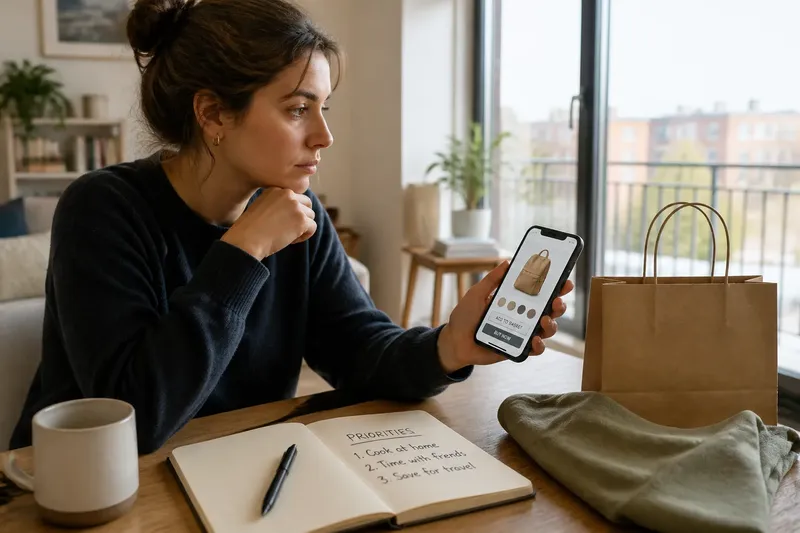
The two-minute pause before a purchase is a brief check against a priority you have already named. Before tapping “buy”, set the item aside and give yourself two quiet minutes to ask what it is for, what it will displace and whether it belongs in the life you are choosing to make.
This is not a rule against pleasure or a promise to make every decision perfectly. It is a way to interrupt the small rush between noticing something and owning it. A pause can be as simple as locking your phone screen, stepping away from a shop display or leaving an item in an online basket while you think.
Name the priority before you meet the temptation
A pause works best when it draws on a priority you have already put into words. “Spend thoughtfully” is so broad that it can justify almost anything. A more useful statement might be, “I want my spare time to include cooking at home,” or “I am making room for visits with friends.”
The priority need not be a grand life plan. It could concern how you want your home to feel, what you want to make time for, or what you are trying to protect in your budget. Write one or two down somewhere easy to reach, such as a phone note. The point is not to create a personal code for every decision; it is to give the pause a real reference point.
Without a named priority, a purchase can be judged only by whether it looks appealing right now. With one, you can ask a more specific question: does this object or experience support something I have chosen, or is it merely easy to want?
Use the same pause in shops and online
When an item catches your eye, stop before handling payment. Take a breath, put down the phone or move away from the display. Then use the two minutes to consider three things:
- The purpose: What would I use this for, and when would that use happen?
- The priority: Which named priority does it support, if any?
- The trade-off: What would this take from instead: money, space, attention or time?
These questions are not a demand to produce a persuasive case for every purchase. “I like it and can comfortably choose it” may be an honest answer. The pause simply makes room to notice when the answer is less clear, such as wanting a new notebook while already having several unused ones.
In a shop, you might place the item back on the shelf while thinking. Online, close the checkout screen or leave the basket untouched. Treat the pause like putting a kettle down on a clear counter: the object can still be there when you return, but it no longer has to be in your hand while you decide.
Give the pause a place in an ordinary week
Rather than relying on willpower at every tempting moment, make the pause a small weekly practice. It should be light enough to keep and flexible enough for different kinds of spending.
- At the start of the week: Read your named priority once. If it no longer feels relevant, revise it before using it to judge purchases.
- When you notice an unplanned want: Take the two-minute pause before paying, whether you are browsing in person or on a screen.
- After the pause: Choose among buying now, leaving the item for later, or letting it go. If you are unsure, a note with the item and the reason you wanted it can help you return to the choice without buying immediately.
- At the end of the week: Spend a few minutes reviewing only the decisions that stayed on your mind. Ask whether the pause clarified a priority or exposed a need to name one more clearly.
This is not a spending diary or a scorecard. A short review helps you see whether the practice is useful without turning ordinary purchases into a test of character. If the pause starts to feel burdensome, use it for purchases that feel rushed or difficult to settle, rather than applying it to every small choice.
What should happen when the answer is uncertain?
Does every purchase need to serve a priority?
No. Enjoyment, convenience and curiosity can be valid reasons to spend. The question is whether the choice feels deliberate once you have considered what it costs you and what you value.
What if the item is on sale for a short time?
A deadline can make an offer feel like a decision already made, but urgency does not establish that you need the item. Use the pause to ask whether you would want it without the discount; if not, letting the offer pass may be the clearer choice.
What if a purchase supports more than one priority?
That can be a sound reason to choose it, provided the connection is concrete. Say you have named cooking at home as a priority and are considering a sturdy chopping board; imagine checking the space in your kitchen and recalling that you regularly prepare meals there. If it fits the space and you expect to use it, the pause has helped link the purchase to an existing routine rather than a passing image of one.
What if I still cannot decide after two minutes?
Uncertainty is a reason to defer, not a verdict that you should buy or refuse. Leave the item aside and return to it later if the need still seems real; a purchase that fits a priority will usually still make sense outside the immediate moment.
Let the decision stay proportionate
The two-minute pause before a purchase is most useful when it creates a little space, not when it becomes another standard to meet. Some purchases will clearly support a named priority; others will be pleasant choices that do not need a larger meaning. The practice is to notice the difference before committing.
Keep the priority visible and the questions plain. If a choice calls for more thought than two minutes can provide, give it more time rather than forcing an answer. A small pause cannot decide what matters for you, but it can help ensure that your next purchase reflects a choice you recognise as your own.