Why People Began Keeping Personal Diaries
Why people began keeping personal diaries: trace how dated records of work, journeys and daily events could also preserve a person's private reflections.
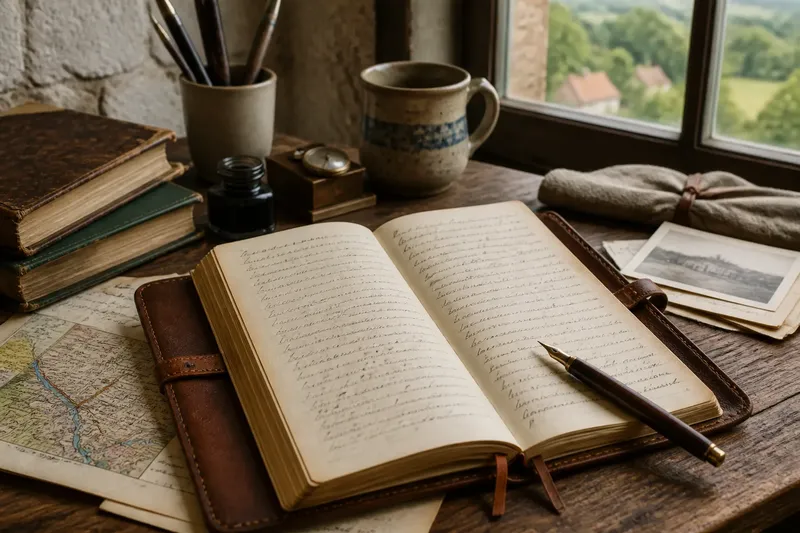
People began keeping personal diaries to remember what a day required and what had happened in it. Why people began keeping personal diaries has no single answer: dated notes served practical purposes, and some later became records of private thought.
Early diaries often kept practical records
Diary writing has not always meant confiding feelings in a bound book. The word has been applied to different forms of dated writing, including notebooks that sat alongside accounts, calendars and household records. Their uses varied by writer and period, but a common purpose was straightforward: to keep information available for later.
A merchant might record a payment or a letter sent. Someone managing a household could note provisions, visitors or work to be done. A traveller might jot down a route, expenses and an encounter while details were fresh. Such writing belonged to a person’s life without necessarily being intended as a private confession.
Think of a practical diary as a shelf of labelled jars: its value lies partly in making separate details easy to find. A note about a delivery or a guest could settle a question later, even if it seemed unremarkable when written.
These records also reflect what a writer chose to notice. A list of purchases, a note about weather or a brief account of a visit can preserve the concerns that shaped a day. Often, the immediate aim was continuity: information from yesterday could help with today’s decisions.
Dated notes carried memory forward
Writing offered a way to retain names, dates and events that might otherwise become indistinct. A diary could support memory when work or travel left little time to dwell on details. It could not preserve everything, and its gaps are part of the record too.
The purpose of an entry can change with time. A note about a repair might later help a family member understand how a home was maintained. An account of a visit, made simply to remember who came by, might preserve a relationship for a later reader. A page need not sound literary to hold something meaningful.
Say a fictional diarist writes, “Mara brought soup after the appointment,” intending only to remember the visit. Later, that sentence could help the writer recall who offered care on a difficult day. The starting point is a practical note; the later value is a small record of kindness, not proof of a broader historical claim.
This distinction matters: the reason for writing and the significance an entry acquires later need not match. A plain record can be useful to its writer now and revealing to a reader in another time.
Travel and public events brought the outside world onto the page
When people who could write travelled, unfamiliar places gave them fresh details to record: roads, lodging, weather and conversations. A note made on the move might combine practical information with a response to a place. The balance depended on the person and the occasion.
Events beyond the household could also appear in personal notebooks. A diarist might mention local news or a change in public life alongside errands and family concerns. That does not make a diary a formal history. It shows how a wider event reached one person’s daily routine.
Imagine a fictional shopkeeper who notes a cousin’s visit because it changes the day’s errands. The first entry lists the visit and unfinished work; in later entries, the shopkeeper adds a thought about a conversation that lingered. The observable change is a move from recording the event alone to recording both the event and the writer’s response.
This is not a clean shift from facts to feelings. A traveller could record a room and a difficult journey in the same entry; someone keeping household notes could add a reaction to a routine task. Daily life often gives people reason to write both.
Reflection became one purpose, not the only purpose
Some diary writers used dated writing to examine their conduct, beliefs or feelings. Religious self-examination, letter-writing practices and changing ideas about personal identity are possible contexts for this kind of writing, but their influence varied across communities and periods. Without narrowing the claim to a particular place and time, it is safer to say that diaries could serve an inward audience as well as a practical one.
Reflective writing did not displace notes about weather, appointments or errands. A single notebook could hold both. Some people wrote regularly; others returned to the page when an event prompted them. There is no one required voice or schedule.
Privacy also depends on intended audience. A writer may expect no one else to read a notebook, imagine that a relative might see it, or plan to share some pages. That expectation can shape how clearly names and events are explained. It is sensible to consider where sensitive writing is kept and what might happen if it is later shared.
What do people ask about personal diaries?
Does a diary have to be written every day?
No. A diary can record only the days that seem useful or memorable. A gap is part of its history, not evidence that the writer has failed.
Is a diary different from a journal?
The terms overlap in ordinary use. “Diary” often suggests dated entries, while “journal” can mean a broader collection of notes or reflections, but the writer can choose either name.
Should a diary include practical details or feelings?
Either may belong, and many diaries combine them. A writer can record what happened and add a response when it feels relevant.
How can a personal diary remain private?
Choose a storage place and format that suit the household, and think carefully before recording details that could harm someone if disclosed. If the writing may be shared or passed on, consider which pages should remain private.
A diary today can still serve more than one purpose
A contemporary diary need not imitate an older notebook or account for every day. A pocket diary suits brief dated notes; a bound notebook leaves room for longer entries; a digital document can make entries easier to search. Each format brings different trade-offs in portability, access and privacy.
Choose a form that fits what you want to remember. For family visits, a name and one detail from a conversation may be enough. For a personal record of a difficult day, a short description can make the entry easier to understand later. For household routines, dates and reminders may matter more than reflection.
Keep the practice manageable. A date and one complete sentence can make a useful record. If a longer entry feels forced, a factual note may be more honest than an elaborate account written to meet an imagined standard.
The reason people began keeping personal diaries remains varied: writers used them to remember, organise, witness events and examine experience. A diary can still make room for both a completed task and an unanswered question, depending on what the day leaves worth keeping.